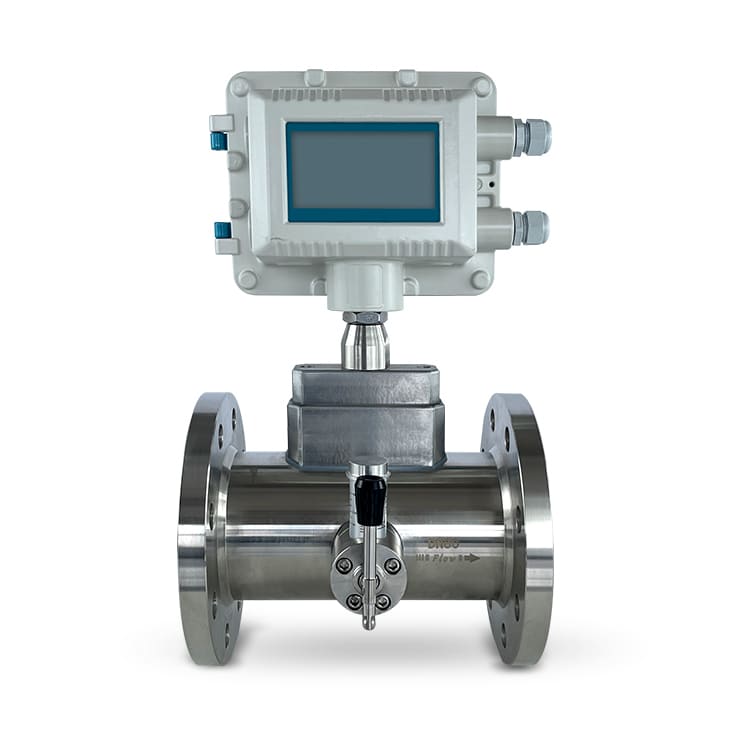
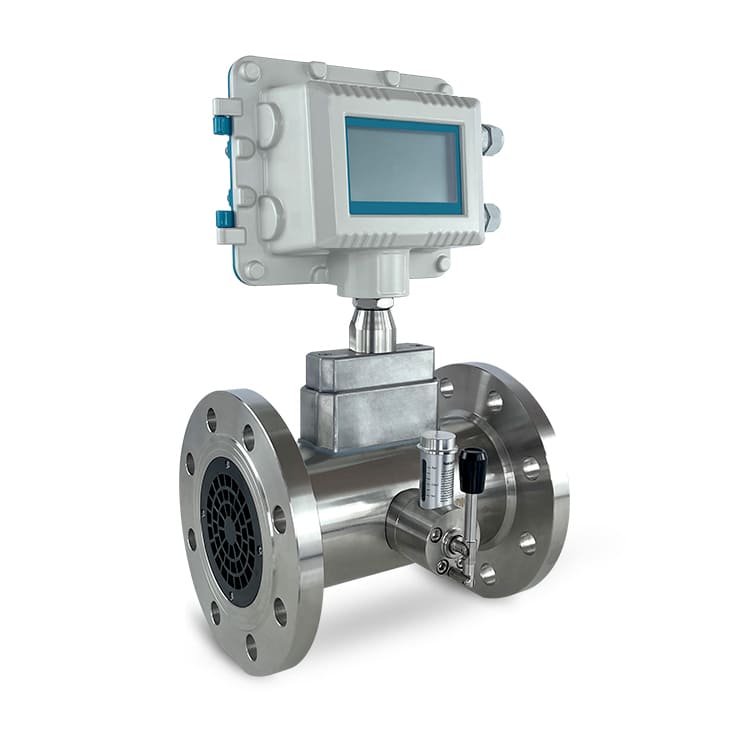
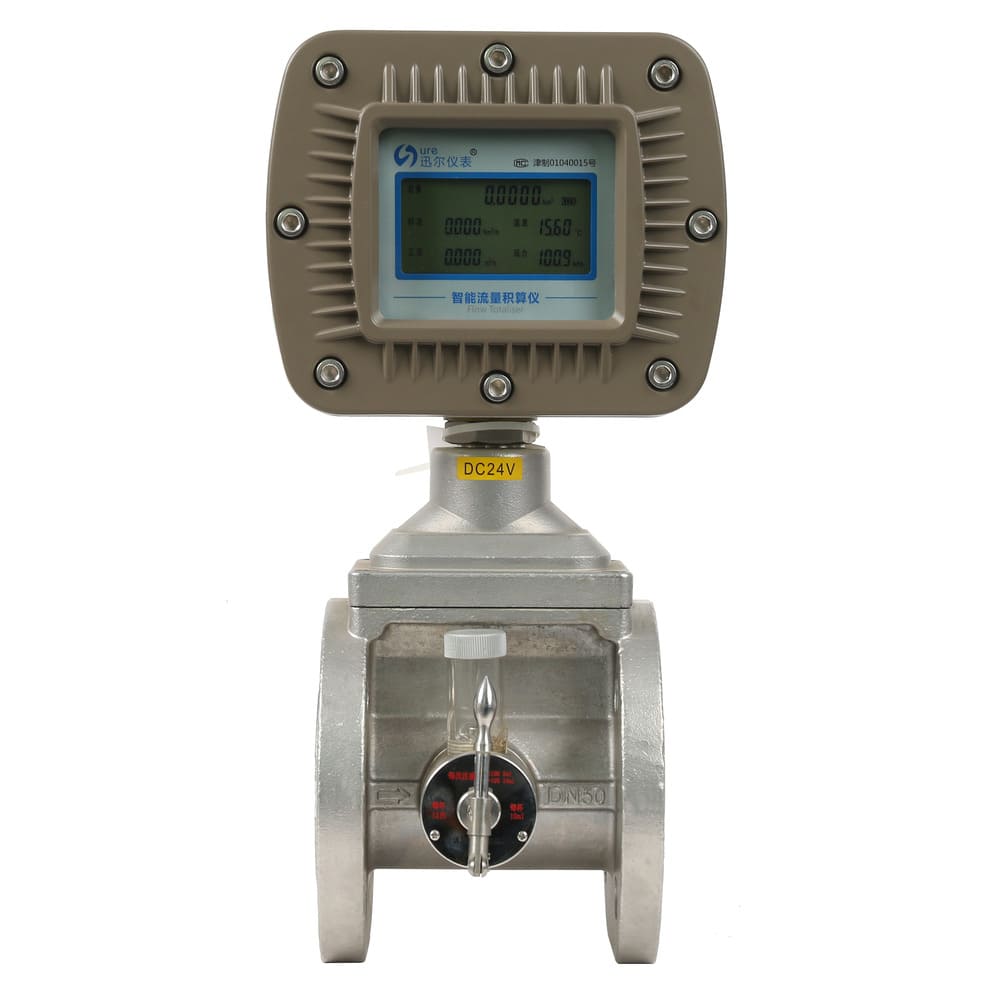
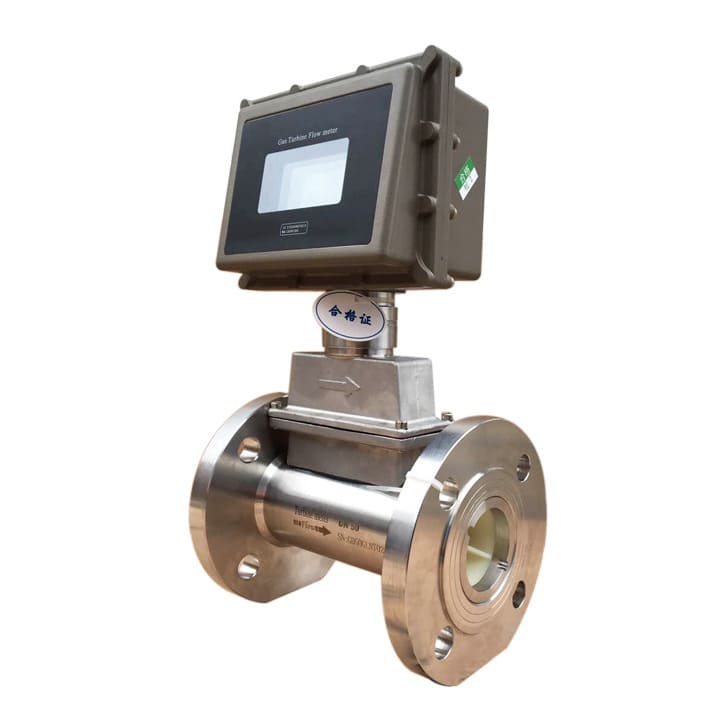
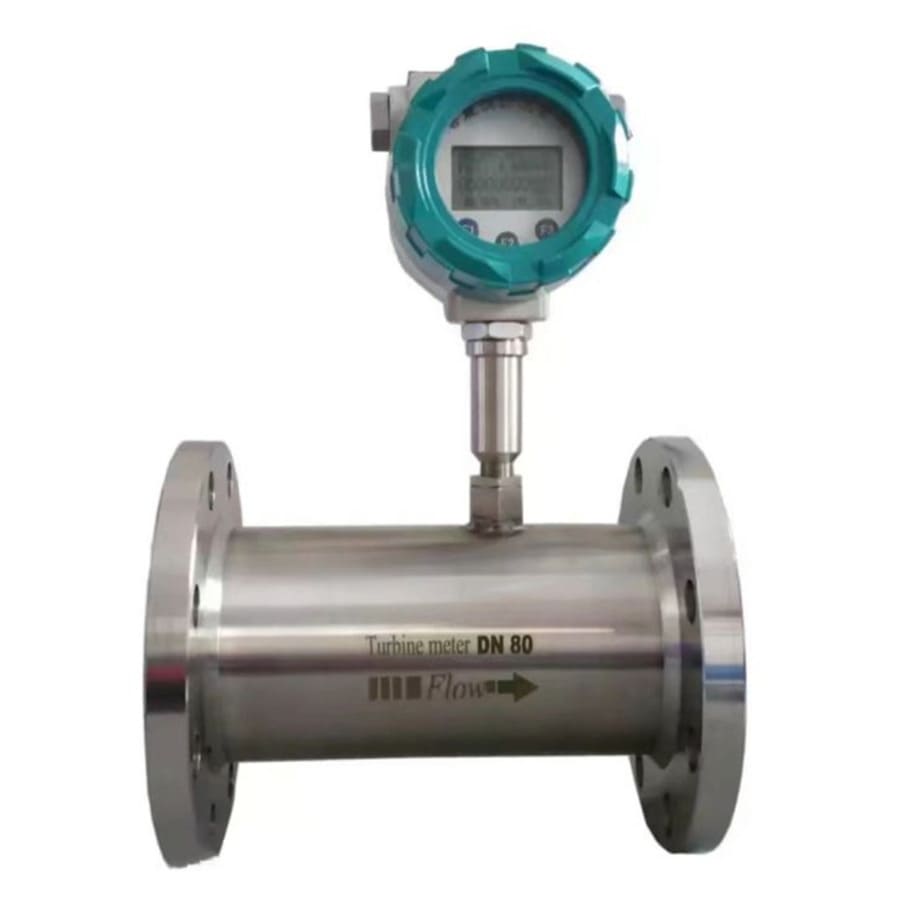
Gas Turbine Flowmeter
Approved by:CE, SIL-3, ATEX Explosion-proof certification
- Measured media: Natural gas, city gas, LPG, air, nitrogen, and other clean, dry, non-corrosive gases
- Accuracy: ‡ 1.5% ( $1% needs to be specially made)
- Nominal diameters: ND20~ND300
-
Medium temperature (gas): −20 °C to +80 °C
-
Ambient temperature: −30 °C ~ +60 °C
-
Humidity (ambient): 5–95% RH (non-condensing)
- Materials (wetted): Body/flanges SS304 (others on request); rotor ABS or aluminum alloy; bearings/shaft SS304
- Power supply: Internal 3.6 V lithium battery (instrument); external 24 VDC for 4–20 mA/pulse/RS-485; optional battery + 24 V dual power
- Explosion-proof (optional): Ex ia IIC T4 or Ex d IIB T6 (order-dependent)
- Integrated Diagnostic Assurance – Performs ongoing internal diagnostics so potential issues are identified before they affect performance.
-
High metering accuracy: Standard accuracy 1.5% (optional 1.0%), so it can be used for industrial measurement and gas settlement.
-
Good repeatability: Stable mechanical structure and signal processing, so repeated readings at the same flow are almost identical.
-
Wide turndown: One meter covers a broad flow span, so users don’t need to install multiple meters on the same line.
-
Integrated temperature and pressure compensation (optional): Tracks gas temperature/pressure in real time and converts to standard volume, so billing and reports are fair and consistent.
-
Strong anti-interference capability: Signal converter with spectrum/linearity correction, so the meter stays stable even near motors, VFDs, or outdoor installations.
-
Low pressure loss: Streamlined flow channel and light rotor, so the meter has small pressure drop and saves energy in gas systems.
-
Rich communication – RS-485 (Modbus) and pulse can directly connect to SCADA, PLC, or IC-card prepayment systems, so data is easy to collect.
-
Dual power choices – Runs from an internal lithium battery or external 24 VDC, so it fits fixed sites and retrofit jobs.
-
Data retention & alarms – Internal memory and status flags keep totals and diagnostics intact, so power loss doesn’t erase records.
-
Rugged construction – Stainless-steel body with quality bearings resists wear, so long-term accuracy stays stable.
-
Explosion-proof options – Intrinsically safe or flameproof models are available, so hazardous-area compliance is covered.
- Gas quality first: Use clean, dry, non-corrosive gas. Install filters or dryers if particulates or moisture are present.
- Respect straight run: Keep at least 10 D upstream and 5 D downstream; double these if space allows or if there’s heavy disturbance.
- Mount correctly: Follow the flow-direction arrow; keep the meter full and pressurized. Protect outdoor installs from direct sun and rain.
- Wire cleanly: Separate signal from power/VFD cables; ground per site standards. De-energize before wiring.
-
Maintenance: Inspect strainers and remove debris; check bearings/rotor if readings drift. Handle rotor carefully—nicks affect accuracy.
-
Calibration: Keep the K-factor certificate safe; verify calibration at least once per year or per regulation.
-
atural gas and city gas metering – Plant supply, boiler houses, shop feeds, and internal allocation.
-
Fuel gas to burners/ovens – Real-time consumption for process lines and thermal equipment.
-
LPG/propane/butane systems – Storage transfer and usage tracking where dry, clean gas is ensured.
-
Compressed air networks – Utility monitoring and leak reduction programs in factories.
-
Inert gases (N₂, etc.) – Carrier and purge gas measurement on process skids.
-
Trade and custody-type internal settlement – Standard-condition totals with T/P compensation for clear reporting.