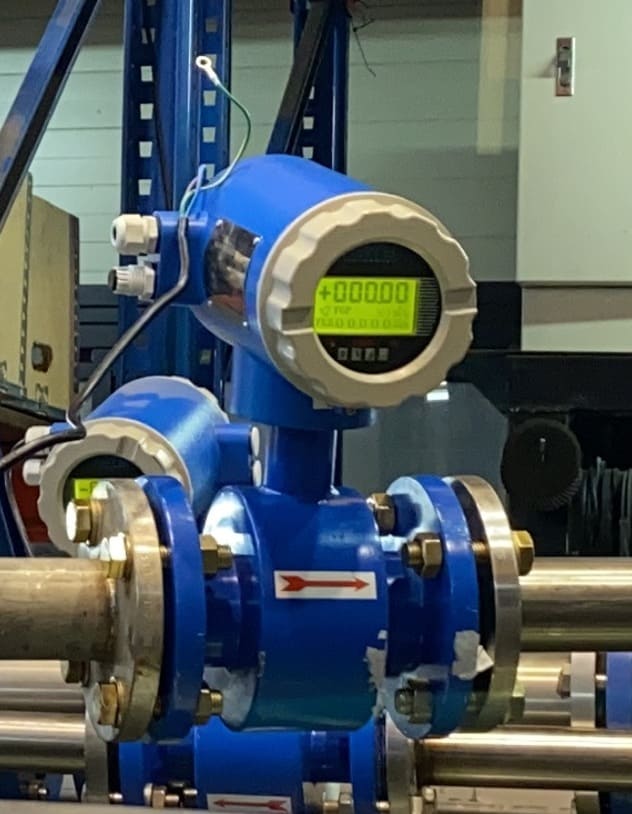
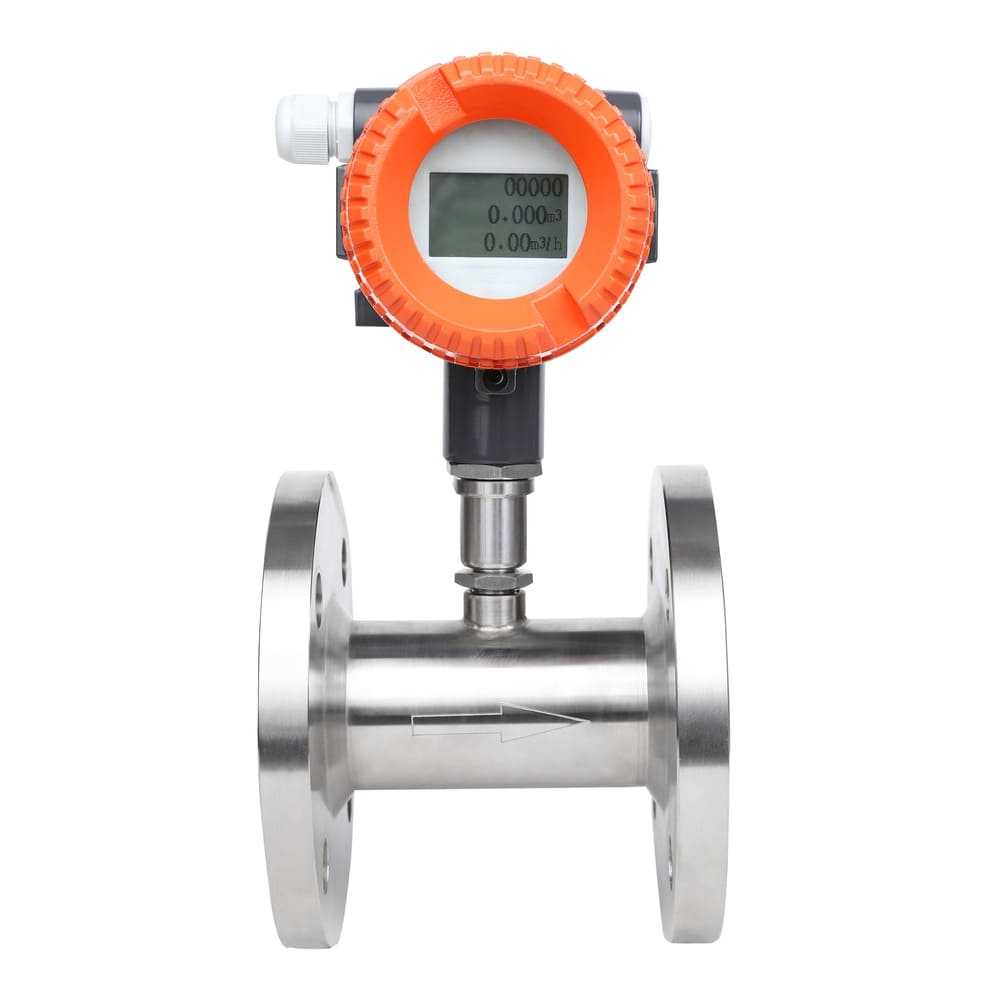
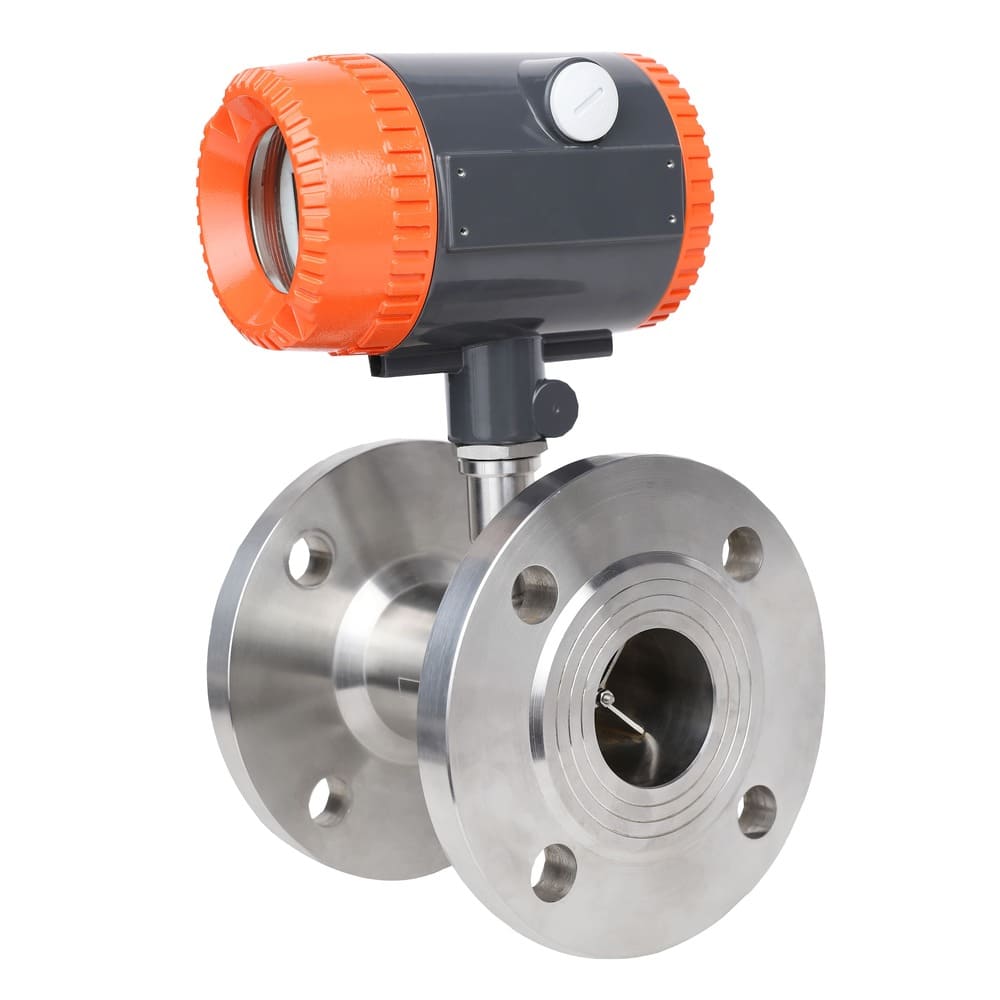
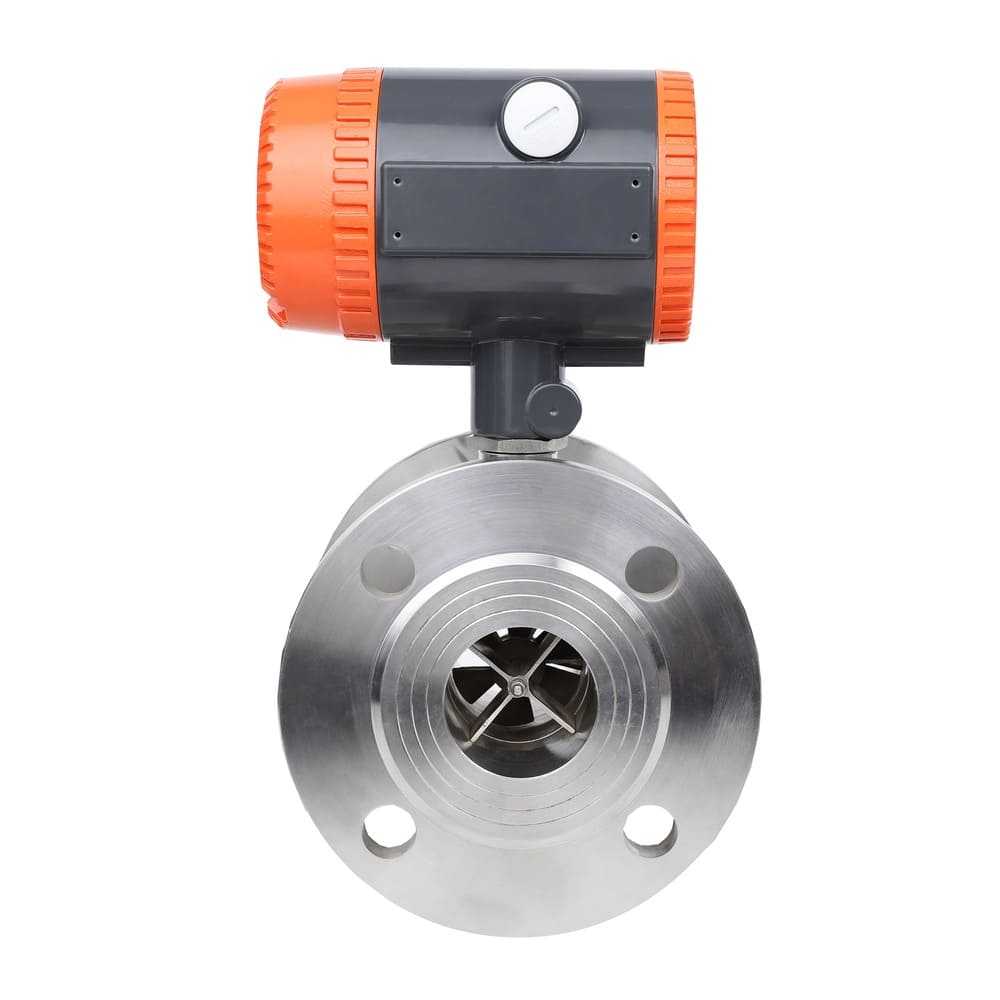
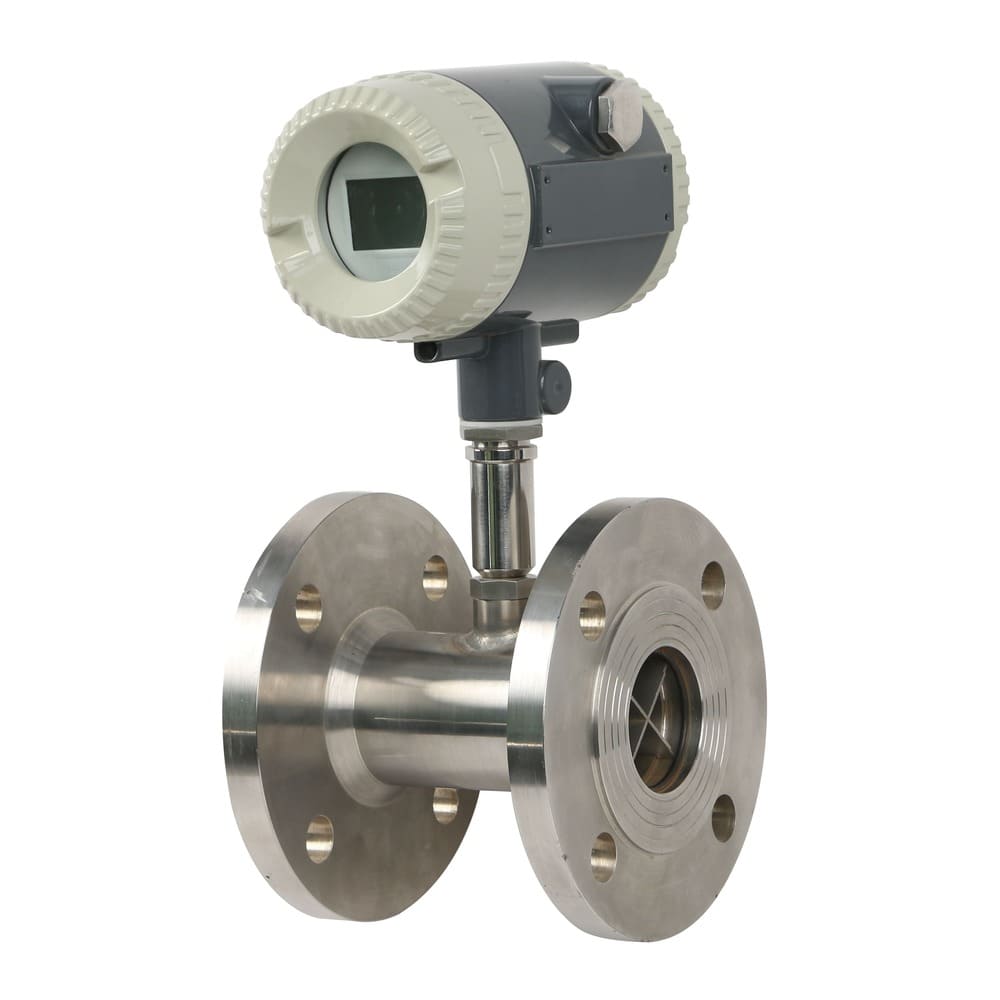
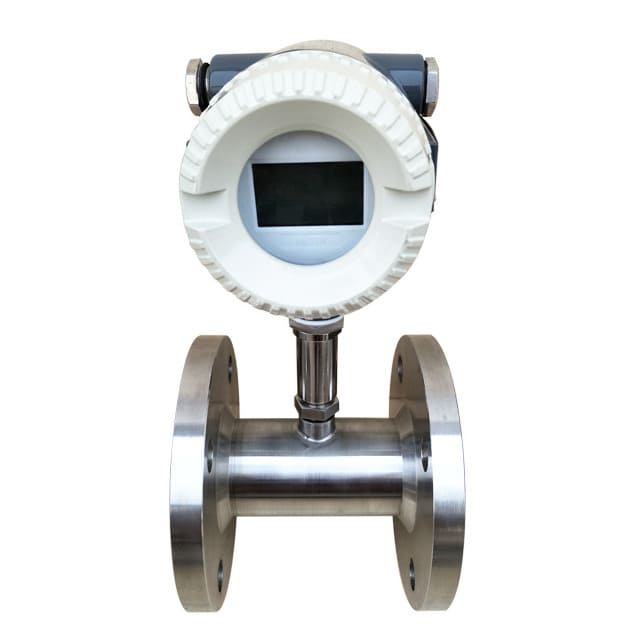
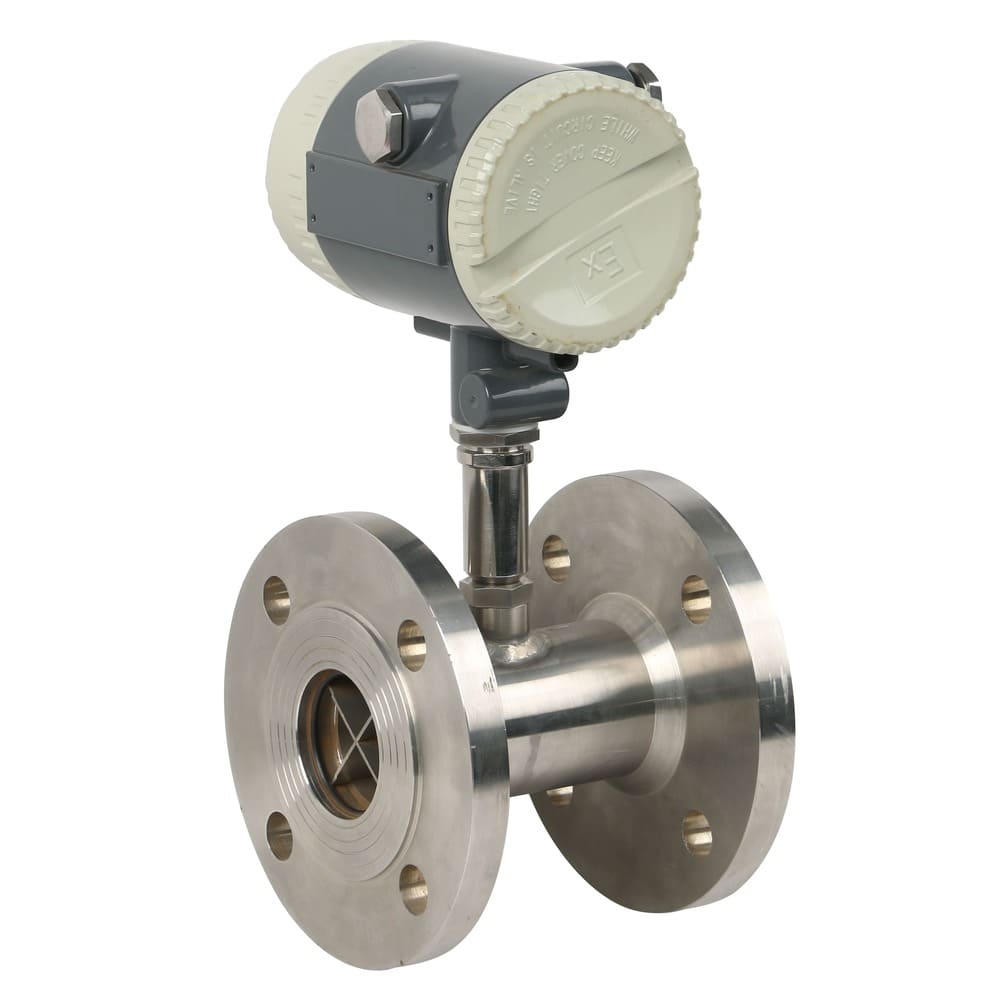
Liquid Turbine Flowmeter
Approved by:CE, SIL-3, ATEX Explosion-proof certification
Designed for accuracy, stability, and ease of use, the our liquid turbine flowmeter provides fast, precise measurement of clean liquids in closed pipelines. It features a robust stainless-steel structure, smooth internal flow path, and a low-friction rotor for high sensitivity and minimal wear. The meter offers wide flow range coverage, strong anti-interference electronics, and multiple output modes for direct connection to PLC or monitoring systems.
Suitable for water, oil, alcohols, and other low-viscosity liquids, it’s widely used in chemical plants, energy systems, food processing, and industrial utilities where reliability and measurement confidence matter most.
-
High measurement accuracy: Precision turbine and matching electronics deliver up to ±1% (even ±0.5%/±0.2%), so the data can be used for billing or settlement.
-
Excellent repeatability: Short-term repeatability can reach 0.05–0.2%, so once calibrated, it keeps measuring stably.
-
Fast response, pulse output: The turbine reacts quickly to flow changes and outputs high-frequency pulses, so totalizing and computer collection are very accurate.
-
Wide measuring range: Because rangeability is broad, one meter covers more operating conditions with fewer sizes to stock.
-
Compact and lightweight structure: Simple internal parts and small size make it easy to install, maintain, or mount on skids.
-
Strong anti-interference: With clean pulse formation and balanced electronics, the output resists electrical noise from drives and motors.
-
Multiple signal outputs: Pulse, 4–20 mA, and RS-485/HART (optional) are available, so it can talk to most automation systems.
-
Low-power intelligent version: Integrated LCD version with lithium battery can run for years without external power, so it’s good for remote points.
-
High-pressure friendly design: Because the body doesn’t need tappings in many versions, it’s easy to specify for higher pressure ratings.
- Easy maintenance — Simple structure with robust bearings and guides, so upkeep is straightforward and downtime is low.
-
Integrated Diagnostic Assurance – Performs ongoing internal diagnostics so potential issues are identified before they affect performance.
-
Medium: Clean, low-viscosity liquids without fibers/solids
-
Nominal sizes: DN4~DN200
-
Accuracy classes: up to ±0.2%
-
Repeatability: 0.05–0.2%
-
Rangeability (turndown): 1:10, 1:15, up to 1:20 (size-dependent)
-
Typical flow ranges (liquid): From 0.04–0.25 m³/h (DN4) up to 80–800 m³/h (DN200); extended ranges available per size
-
Materials (wetted): 304 / 316(L) stainless steel; hard alloy bearings; Al₂O₃ components (model-dependent)
-
Process temperature (medium): Approx. −20 to +120 °C (standard liquid versions)
-
Ambient temperature: Approx. −10 to +55 °C (displayed versions), −20 to +60 °C (electronics, typical)
-
Outputs: Pulse frequency (open-collector), 4–20 mA (two-wire), optional voltage; RS-485 (Modbus) and HART (per configuration)
-
Power supply: 24 VDC external (typical); optional internal lithium battery for local totalizer models
-
Explosion protection: Exd IIB T6 and intrinsically safe options (model-dependent)
-
Protection class: IP65 (higher on request for certain assemblies)
-
Cabling / distance: Typical transmission up to 1000 m with specified cable; M20×1.5 cable entry (explosion-proof models)
-
Transmitter styles: two-wire 4–20 mA, three-wire pulse, integrated display (battery)
-
Communications: RS-485/Modbus, HART (by model)
-
Constructions: threaded, clamp/screw, flanged; sanitary; high-pressure; explosion-proof
-
Special versions: low-temperature, high-temperature, insertion type (large DN), sanitary/food grade
-
Accessories: upstream filter/strainer, air eliminator, flow straightener, mating flanges, cable kits
-
Choose a stable location: Install where piping is well supported, vibration is low, and electrical noise is controlled.
-
Straight pipe & conditioning: Provide adequate straight run; add a flow straightener if elbows/valves are close upstream.
-
Keep it clean: Fit a strainer upstream if the liquid can carry debris; avoid air slugs and cavitation at high flow.
-
Valve strategy: Put the control valve downstream of the meter; open upstream valves slowly to protect the rotor.
-
Commissioning checks: Verify K-factor, units, outputs, and zero; confirm pulse levels and current loop loads match your PLC/DCS.
-
Pressure & temp limits: Stay within the stated pressure class and process temperature rating for the selected build.
-
Periodic verification: Re-check K-factor on a prover or reference if used for custody/trade or after maintenance.
-
Storage & handling: Cap ends, avoid impacts, and keep electronics dry; store within the specified temperature and humidity.
-
Water & demineralized water — Process and utility flow monitoring, make-up water, rinse, and CIP return (clean liquids).
-
Light oils & fuels — Diesel, kerosene, and lube oils where viscosity is low and stable (or calibrated on product).
-
Alcohols & solvents — Ethanol, methanol, and compatible solvents in blending, batch dosing, and transfer.
-
Chemical & pharma utilities — Clean process liquids, heat transfer fluids, and skid-mounted dosing lines.
-
Food & beverage (clean services) — Syrups and beverages within viscosity limits and cleanliness requirements.
-
Batching & loading skids — Fast response for start/stop accuracy in package lines and truck loading (with pulse output).
-
Energy & HVAC — Chilled/hot water loops and plant utilities (with correct materials and straight runs).