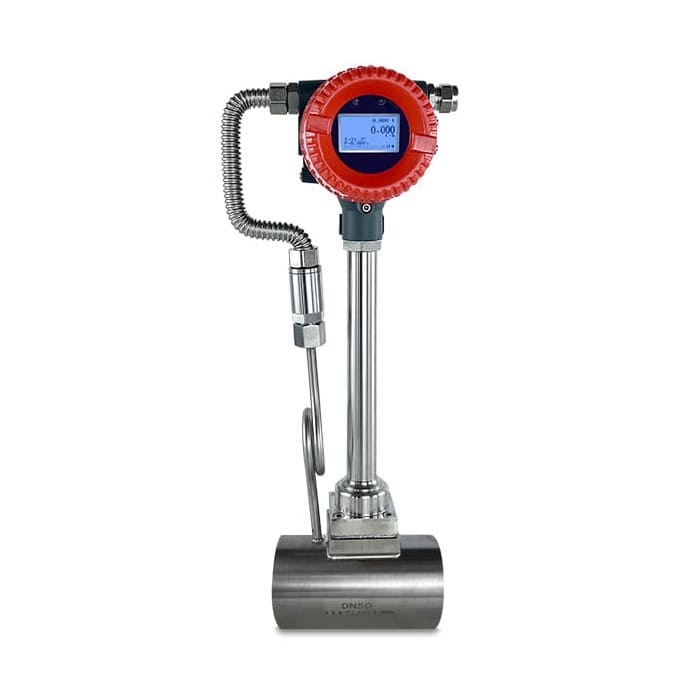
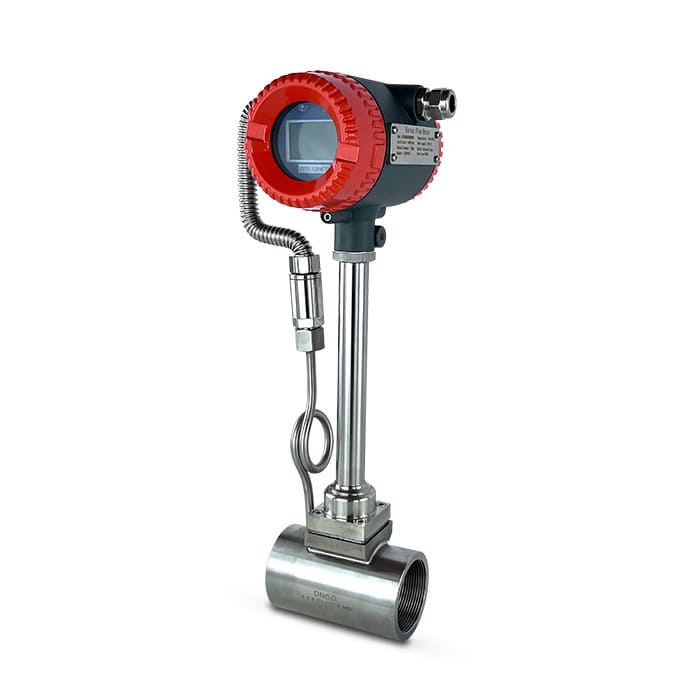
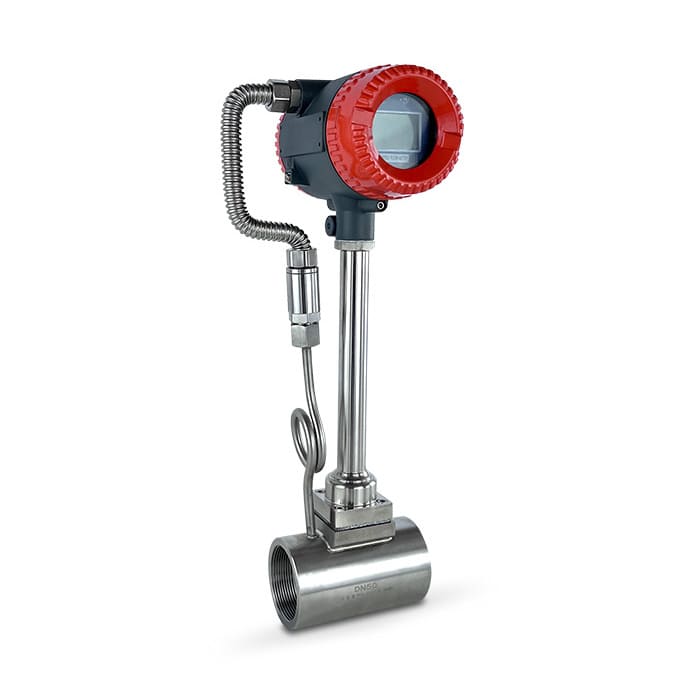
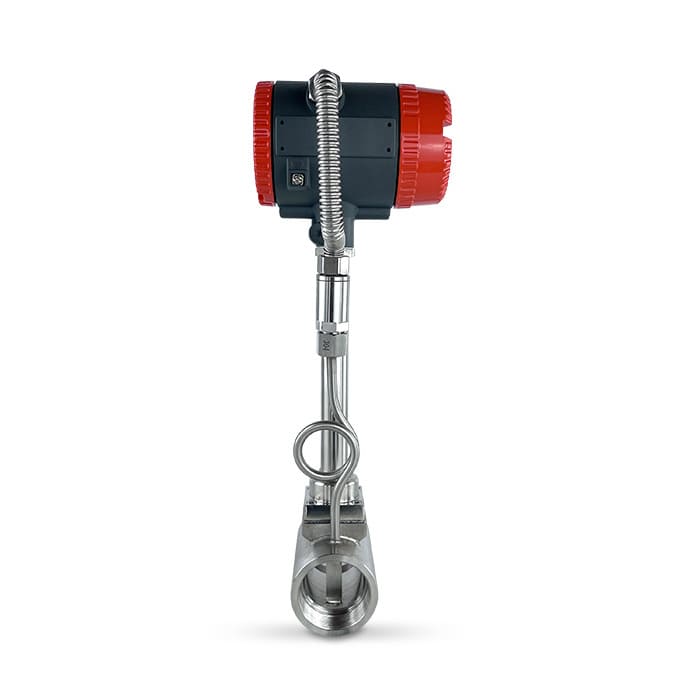
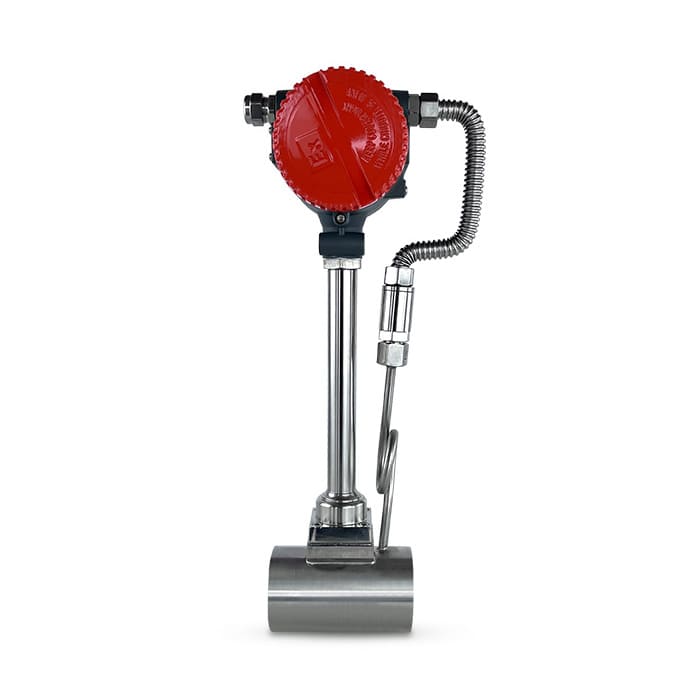
Inline Vortex Flowmeter
Approved by:CE, SIL-3, ATEX Explosion-proof certification
-
Direct installation in the pipe with a compact footprint.
-
Best suited for clean or moderately clean fluids; heavy particulates can affect accuracy or cause fouling of the bluff body.
-
No moving parts – The sensing element never touches the fluid, so reliability is high and maintenance stays low.
-
High accuracy – Factory accuracy to ±1.0% (±1.5% typical), so you can use the numbers for control and internal billing.
-
Wide rangeability – Turndown up to 1:20 (and higher by model), so one meter covers normal and low flows.
-
Handles tough media – Works on clean liquids, dry gases, and steam, so one platform fits many services.
-
High-temperature designs – Sensor options rated up to ~350 °C, so steam and hot services are covered.
-
Strong anti-vibration – DSP-based signal conditioning resists noise, so readings stay stable near pumps or VFDs.
-
Flexible outputs – Pulse, 4–20 mA, and RS-485/Modbus, so integration with PLC/SCADA is straightforward.
- Explosion-proof – Intrinsically safe/flameproof versions available, so you can install in hazardous zones.
- Built-in Self-Diagnosis – Continuously monitors sensor health and electronics to ensure the meter is always in normal working condition.
-
Meter type: Inline, full-bore vortex flowmeter
-
Applicable media: Liquid, gas, and steam (saturated/superheated)
-
Nominal diameters: DN15–DN300 (inline/flange); above DN300 available as insertion type
-
Accuracy (inline): Liquids ±1.0%; Gas/steam ±1.5%
-
Repeatability: Liquid ≤0.2%, Gas/steam ≤0.5%
- Medium temp: −40 °C to +280 °C
-
Display: LCD local display showing instantaneous and total flow; compensated versions also show temperature/pressure
-
Protection class: IP65 standard; IP68 for submerged/remote sensor versions
-
Explosion-proof grade: Ex ia IIC T5/T6 or Ex d IIB T5 (model-dependent)
-
Allowable vibration: Piezo type up to about 0.2 g; capacitive type up to about 1–2 g
-
Ambient conditions: −20 °C to +55 °C; humidity 5–90% RH
- Install on a full, clean pipeline. The pipe should not be partially filled and should not carry large sludge or fibers that disturb vortices.
-
Match the size to the flow. If the actual pipe is too big for the expected flow, use reducers so the flow velocity stays within the meter’s working range.
-
For steam or high temperature. Keep the transmitter away from hot insulation; use the high-temperature version if the medium exceeds the standard range.
- Avoid strong vibration. Vortex meters can compensate for some vibration, but long-term heavy vibration will reduce signal quality.
-
Periodic inspection:Calibration and periodic verification are common to maintain accuracy, especially when process conditions change (temperature, pressure, viscosity).
-
Do not weld with the meter mounted. If pipeline welding is needed, remove the instrument to avoid damaging the electronics.
-
Steam, gas, and liquid flow monitoring in process industries
-
Boiler and turbine feedwater, condensate lines, and cooling water circuits
-
Chemical processing, including corrosive and cleaning-in-place (CIP) environments when using appropriate wetted materials
-
Food and beverage pipelines requiring hygienic or sanitary designs (where permitted)
-
Water treatment, municipal utility networks, and district heating/cooling systems
-
Pharmaceutical and electronics manufacturing where clean-in-place and robust diagnostics are valued