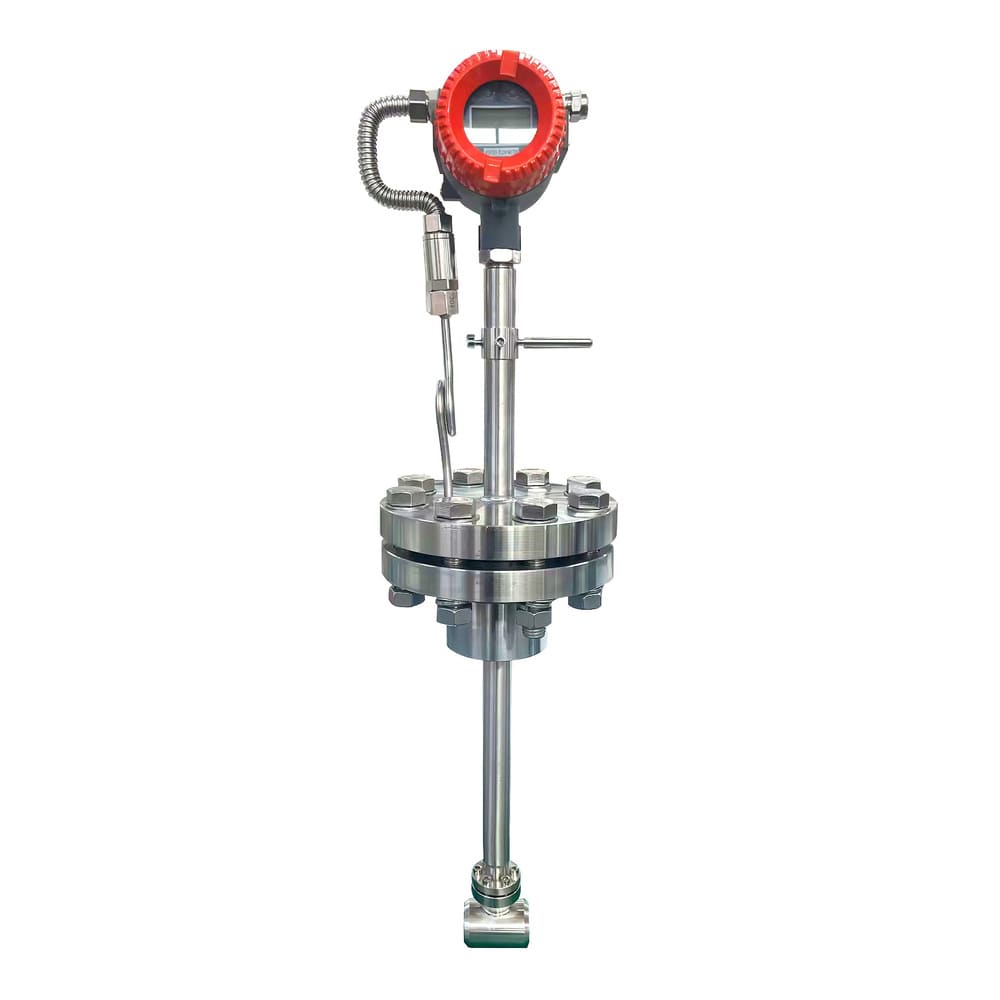
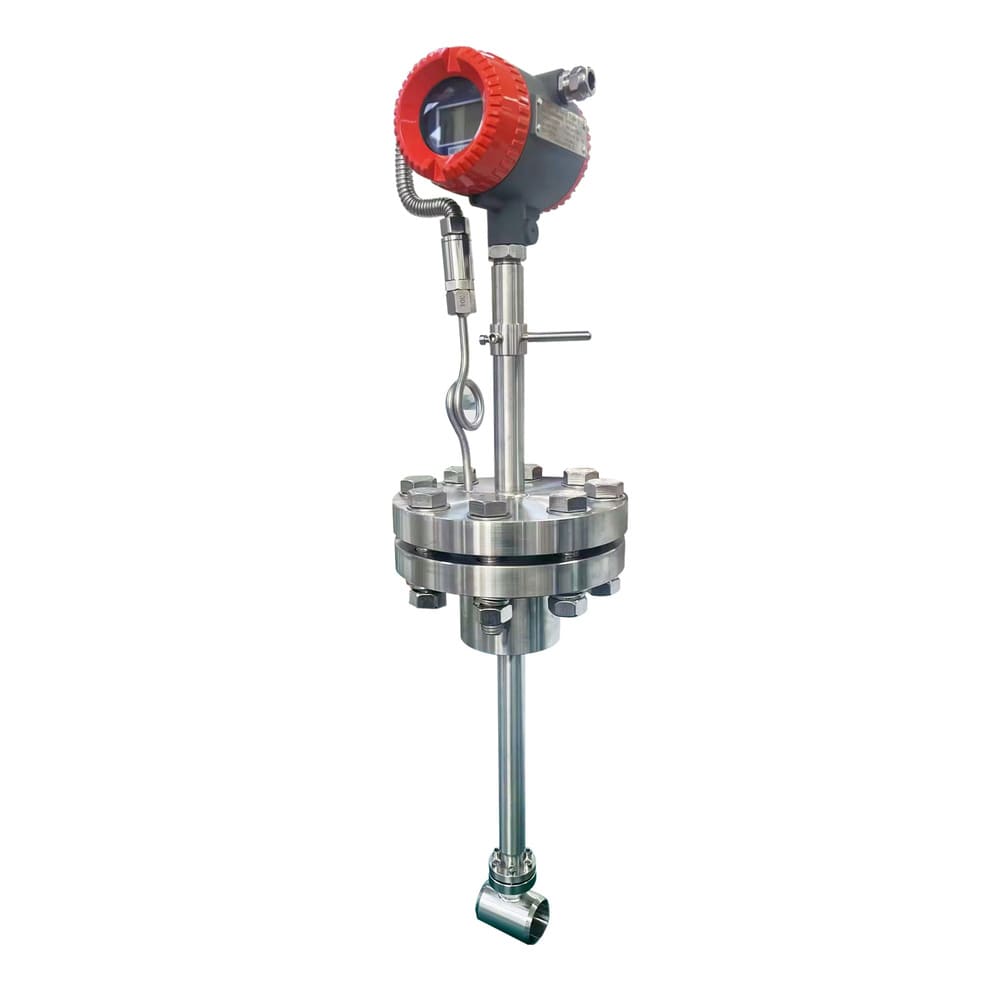
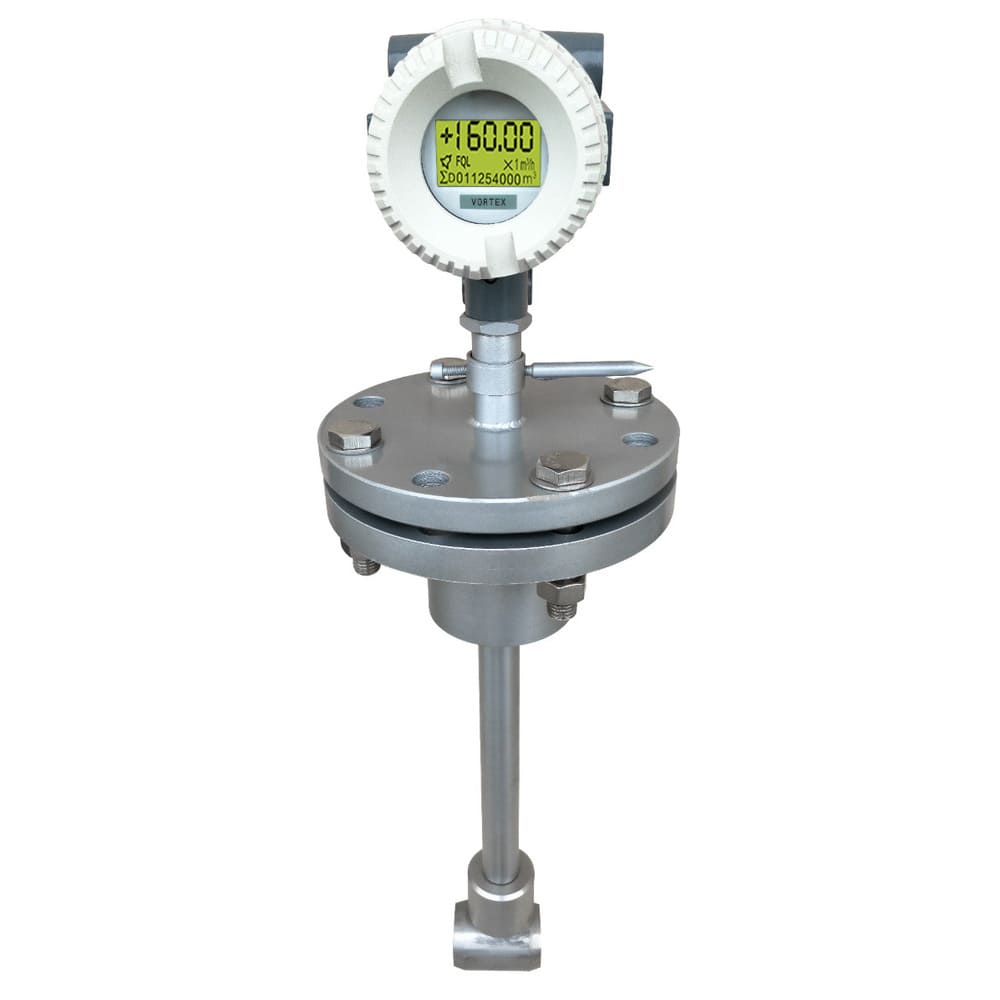
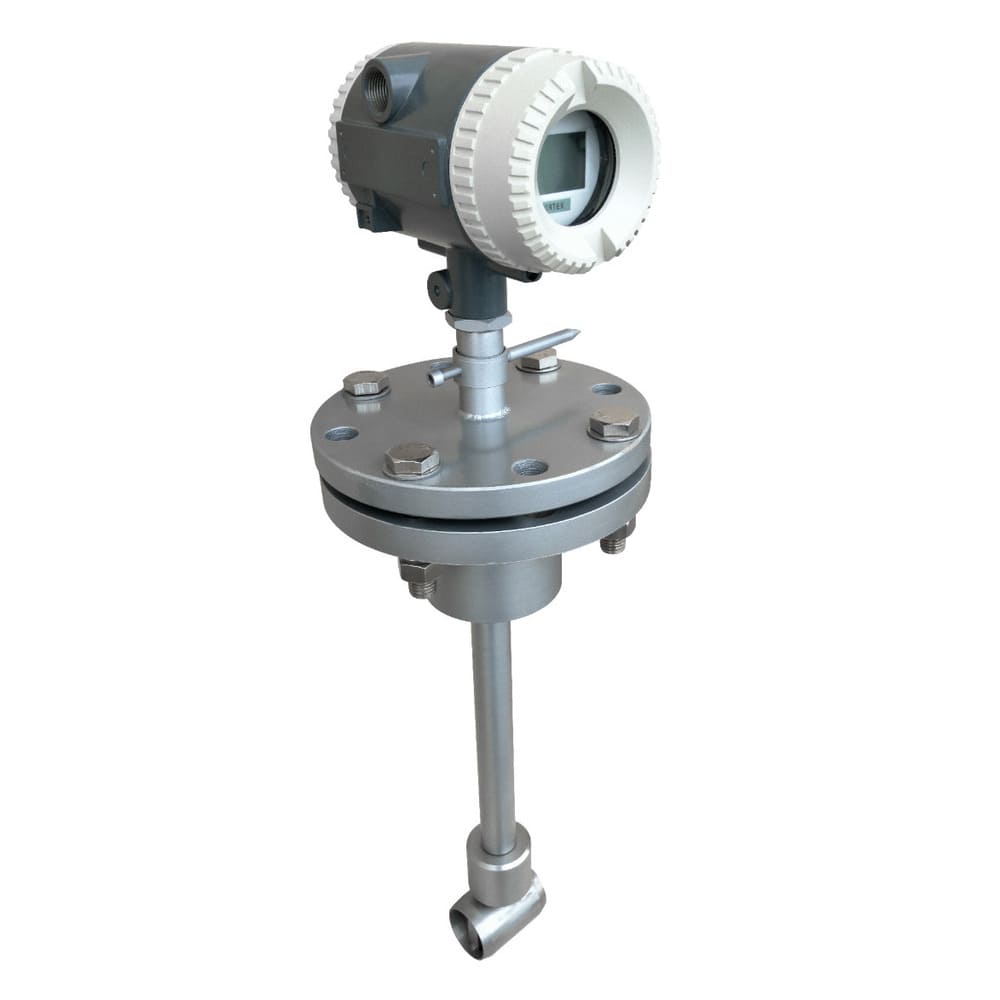
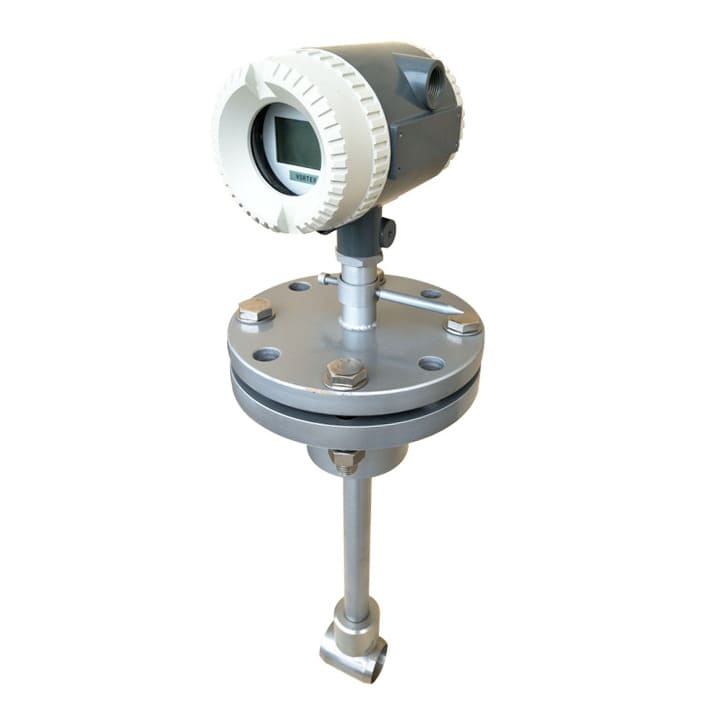
Insertion Vortex Flowmeter
Approved by:CE, SIL-3, ATEX Explosion-proof certification
-
Insertion design for large pipes – Installs through a single nozzle, so you can meter DN250 and above without changing the pipeline.
-
No moving parts – The sensor doesn’t wear, so accuracy stays stable and maintenance is low.
-
Multi-medium capability – Measures liquid, gas, and steam, so one instrument type can standardize a plant’s flow metering.
-
Wide turndown (up to 1:20/1:30) – Handles big flow swings, so you still get usable readings at low load.
-
High-temperature resistant structure – Optional high-temp probe lets you measure steam lines without extra cooling.
- Applicable pipe size: Standard from DN250 to DN1200; above DN1200 on request
-
Measured media: Liquids, gases, and steam
-
Accuracy (insertion): About ±2.5% of reading / ±2.5% FS under specified installation conditions
-
Repeatability: Better than 0.5% (medium-dependent)
-
Range ratio: 1:6 to 1:30 (depends on medium and Reynolds number)
-
Medium temperature: Standard −40 °C to +260 °C; high-temperature versions: up to +450 °C (ordered by agreement)
-
Allowable vibration: Piezoelectric type about 0.2 g; capacitive type up to 1.0–2.0 g
-
Power supply options: 12 VDC or 24 VDC; battery-powered 3.6 V for local display types
-
Protection class: IP65 for standard transmitter heads; IP68 available for immersed sensor sections
-
Explosion-proof grade: Intrinsically safe or flameproof (Ex ia / Ex d) according to selection
-
Ambient conditions: −20 °C to +55 °C; 5–90% RH
- Communication: Modbus-RTU over RS-485 for remote reading / parameter setting (optional)
- Choose the right location: Install on a full, pressurized, non-pulsating line with enough straight run before and after the meter.
- Avoid strong vibration: Although this meter has DSP and good anti-vibration design, keeping away from strong mechanical vibration will improve long-term stability.
- Mind high temperature: On steam lines, keep the converter/electronics away from very hot spots; use an extension neck or remote converter if needed.
-
Protect outdoors: If installed outside, add a sun/rain cover to protect the transmitter and cable entries.
-
Clean medium is better: Although it can handle some impurities, large particles or wet steam slugs can affect measurement — add separators/filters where needed.
-
Periodic verification: For steam and gas billing points, confirm calibration regularly and record K-factor/sensor data for traceability.
-
Boiler and plant steam supply lines (saturated and superheated steam)
-
Compressed air main headers and plant air distribution
-
Nitrogen and other industrial gases in large pipelines
-
Cooling water and circulating water in power, steel, and chemical plants
-
Process water where a full-bore meter is too expensive for large diameters
-
Central heating / district energy systems for steam or hot water
-
Sewage treatment and industrial wastewater (cleaner lines) where non-moving sensors are preferred
-
Energy measurement and balancing in large factories